
Incense burns across the four seas, and cultural heritage illuminates the nine provinces.
A "Root Map" of Global Nezha Culture“
Starting from the ancestral temple in Jiangyou, the Nezha culture has crossed mountains and seas, taking root and sprouting in Chinese communities around the world. Temples on the mainland continue the thousand-year-old tradition, temples in Taiwan innovate diverse folk customs, and temples overseas carry memories of nostalgia. Every temple is a "station for the inheritance" of the Nezha spirit: every wisp of incense is connected to the "roots" of the ancestral temple in Jiangyou.
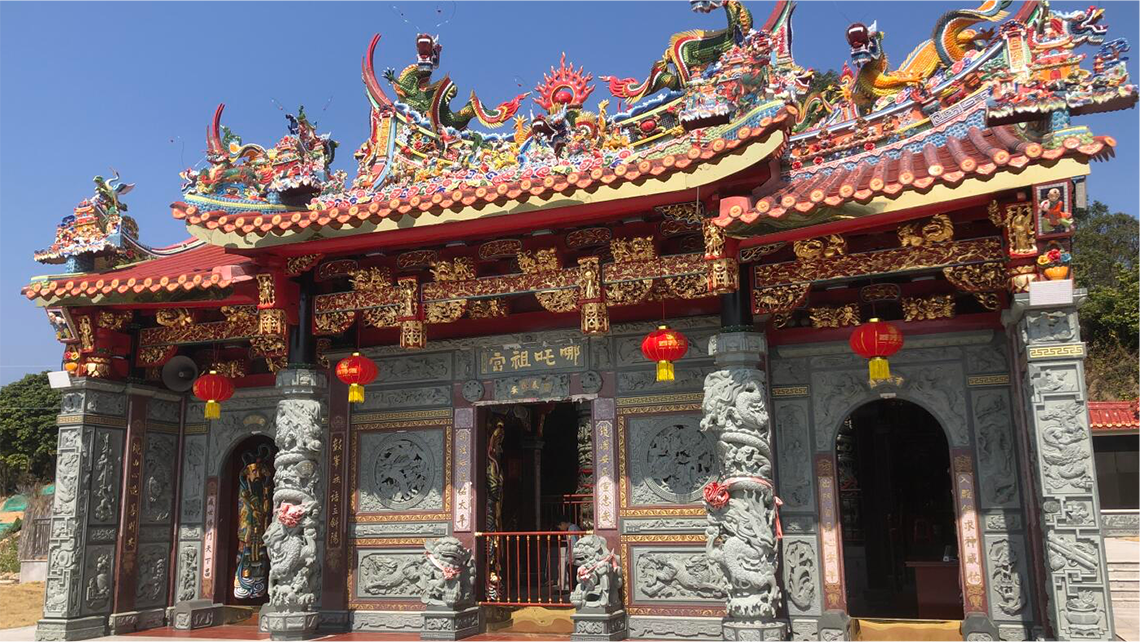
Distribution Map
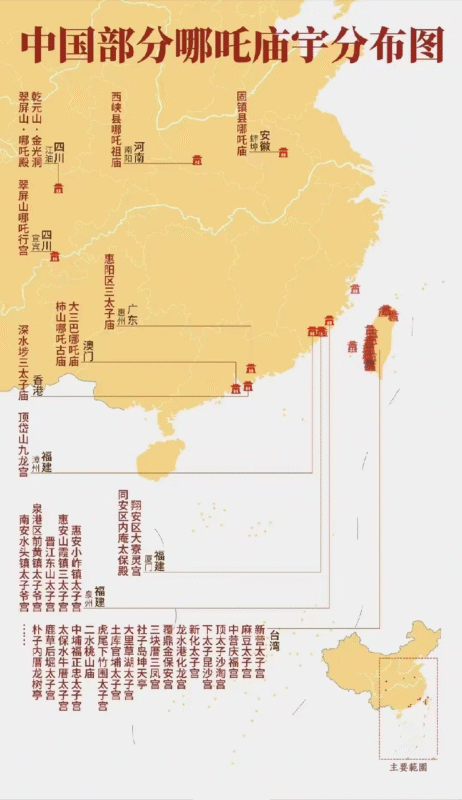
(I) Mainland China: The Empirical Evidence of Our Roots
Mainland China is the birthplace of Nezha culture, with temples in many places supported by ancient texts, historical sites, or official certifications, making it the "root" of Nezha worship worldwide.
"Pulse origin point".
The Nezha Cultural Relics Cluster in Jiangyou, Sichuan, is a core area of Nezha culture explicitly recorded in the "Jiangyou County Annals" and "Long'an Prefecture Annals." Jiangyou boasts numerous sacred sites, including Jinguang Cave, the Nezha Temple on Cuiping Mountain, and the Chentang Pass Ruins, serving as the origin for temples in Taiwan, Singapore, and other places seeking their roots. Among them, Jinguang Cave preserves a Nezha statue from the Song Dynasty, corroborating the historical record of it as "the place where Taiyi Zhenren transmitted the Dharma." The Nezha Temple on Cuiping Mountain, due to the legends of its "efficacious rain" throughout the ages, has become the core site of local folk beliefs.
The Nezha Palace on Cuiping Mountain in Yibin, Sichuan, is a palace located on the mountainside of Cuiping Mountain. It is famous for the true story of Mr. Huang Zhang, a believer from Taiwan, who "found his roots in a dream" in 1990. It was rebuilt in 1991 with funds raised by believers from both sides of the Taiwan Strait. Every year, dozens of compatriots from Hong Kong, Macao and Southeast Asia come to find their roots.
The Nezha Ancestral Temple in Xixia County, Henan Province, is located in Kuiwen Village, Dinghe Town, Xixia County. According to the "Xixia County Annals" and expert research, this site is the location of "Chenyan Pass", the birthplace of Nezha. The original Nezha Prince Temple was built in the Qing Dynasty, destroyed in 1945, and rebuilt in 2001 with funds raised by Taiwanese compatriots.
The Li Family Prince Temple in Nan'an, Quanzhou, Fujian Province, is located in Xishu Village, Shijing Town, Nan'an City. It is an important source of the Nan Nezha belief. It was first built in 1945 and has been rebuilt many times since. The main deity worshipped is Nezha, and the secondary deities include Li Jing, Jinzha, and Mu.
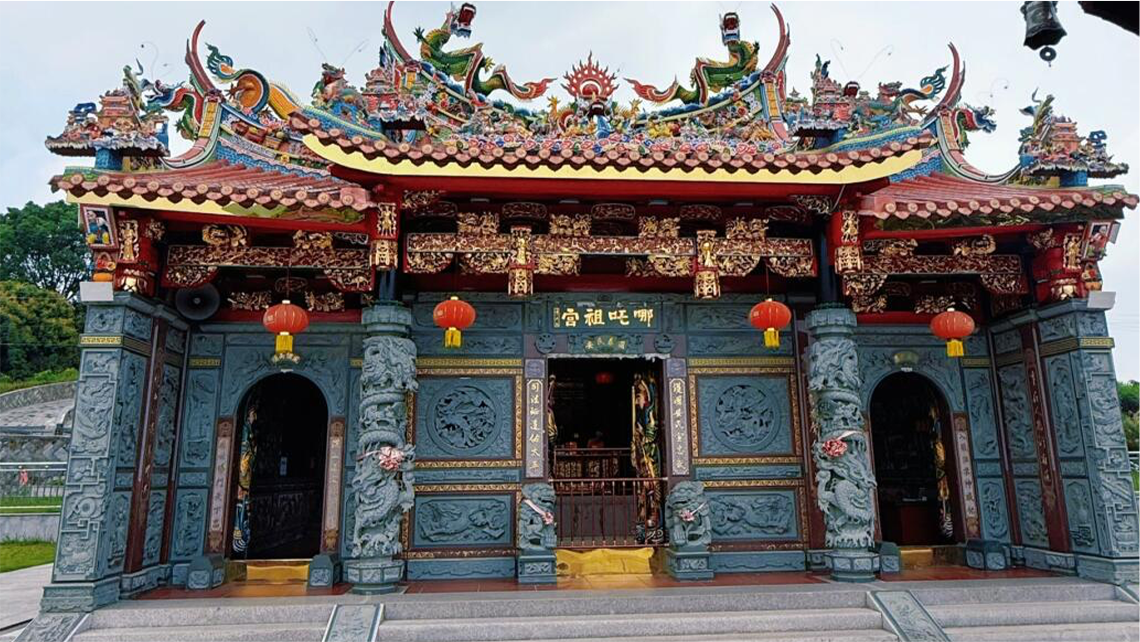
(II) Hong Kong, Macao and Taiwan: The core stronghold for inheriting the glory
Sanfeng Temple, located in Sanmin District, Kaohsiung City, Taiwan, was first built in the eleventh year of the Kangxi Emperor's reign (1672) and was originally named "Sanfeng Pavilion". It was renamed and expanded in 1971 and is the largest and oldest Nezha temple in Taiwan.
The Xinying Nezha Temple in Chiayi, Taiwan, was first built in 1663 by immigrants from Jinjiang, Quanzhou. It is one of the earliest Nezha temples in Taiwan and is known as the "premier Nezha temple in Taiwan". Currently, there are more than 370 registered Nezha temples in Taiwan, with more than 6 million believers.
The Na Tcha Ancient Temple on Shishan Hill and the Na Tcha Temple at the Ruins of St. Paul's in Macau share a long history of Na Tcha worship, forming a unique "one mountain, two temples" pattern. The Shishan Na Tcha Ancient Temple was first built in the 18th year of the Kangxi Emperor's reign (1679). The existing building is a six-pillar square pavilion structure, expanded after the plague in 1898, preserving stone shrines, incense burners, and the "Miracle Stone" remnants from the Guangxu era of the Qing Dynasty. Every year on the 18th day of the fifth lunar month, Na Tcha's birthday, the two temples jointly hold a parade stretching for one kilometer, with ceremonies such as palanquins and floats continuing a century-old tradition.
The Sai Kung Pak Kong Na Tcha Temple in Hong Kong is a community-based religious site. It is the most representative of these temples. Originally built in the late Qing Dynasty, it is dedicated to Nezha, the Third Prince, and also worships the Earth God and the Tiger God. It is an important testament to the religious culture of the floating communities in Hong Kong.
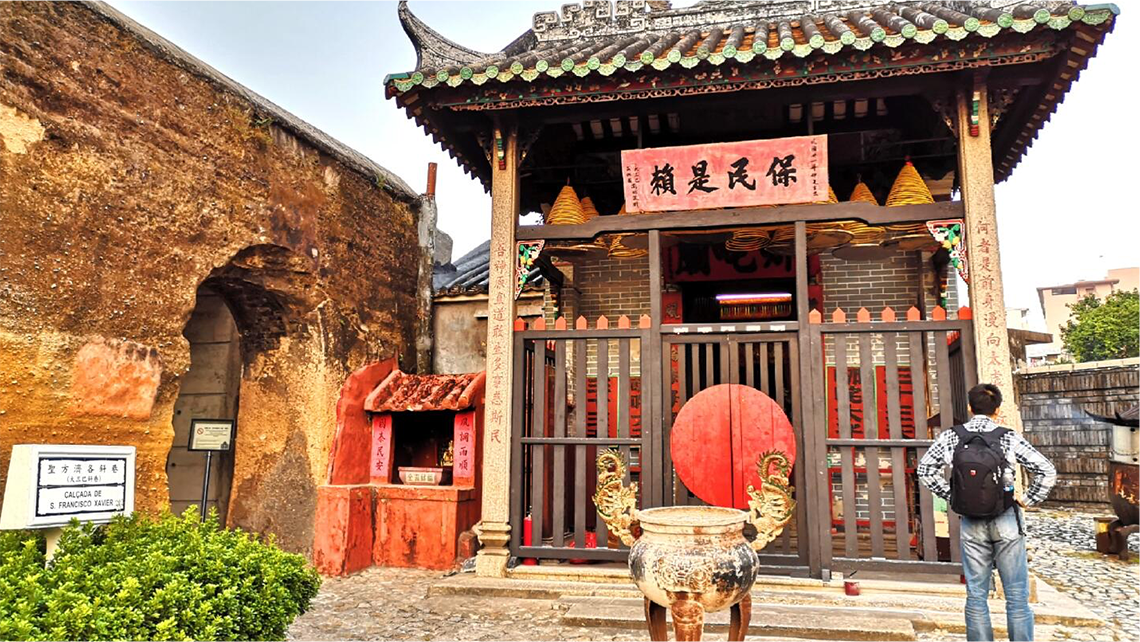
(III) Overseas Regions: A Spiritual Home Connected by Nostalgia
— Overseas Nezha temples were mostly founded by Chinese immigrants, continuing the traditions of their homeland while incorporating local characteristics, becoming a "refined" means of maintaining Chinese cultural identity.
"Divine bond".
The Nezha faith in Singapore was introduced with early Chinese immigrants, and Feng Xuan Gong and Lotus Altar are representative temples dedicated to Nezha. Lotus Altar was first built in the 20th century and is dedicated to Nezha, the Third Prince of Lotus, with statues of Zhang Tianshi, the Great Sage Equal to Heaven, and other deities. Despite relocating several times due to urbanization, it still maintains the tradition of "returning incense from the ancestral temple".
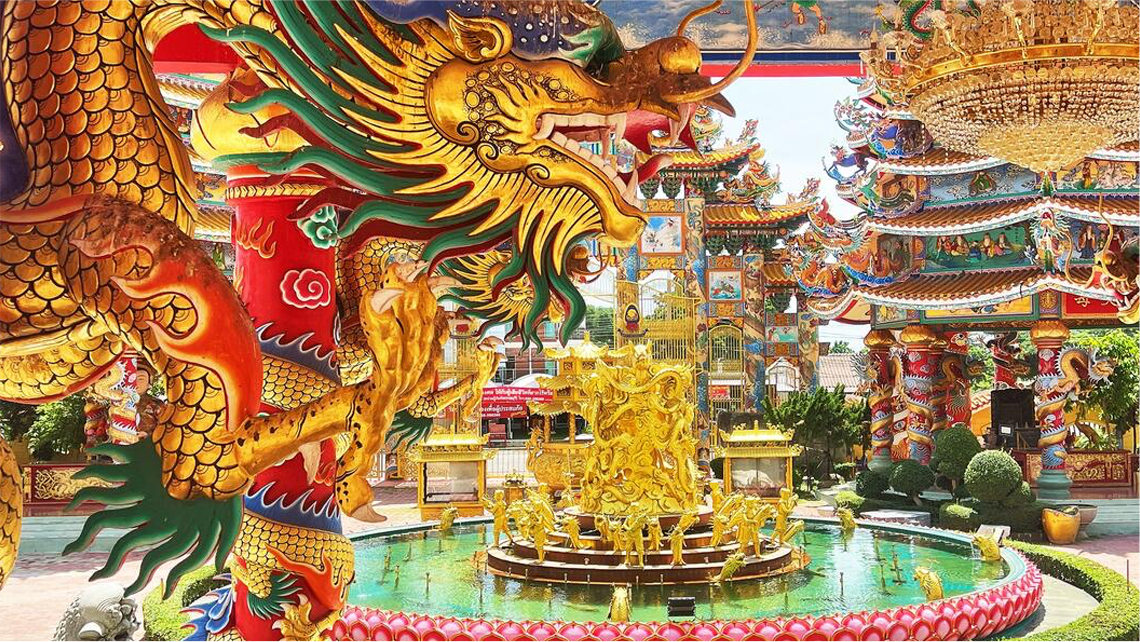
The Nezha Temple in Bangkok, located near Bangkok's Chinatown, is one of the largest Nezha worship sites in Southeast Asia. It is known for its magnificent Sino-Thai architectural style, with 2,840 dragon carvings inside, perfectly combining traditional Chinese Taoist elements with Thai religious art.
Penang, Malaysia: The Prince Yeh Temple. Penang, a major Chinese-majority area in Malaysia, has many Na Tcha temples. Among them, the Prince Yeh Temple in George Town has the longest history, which was built in the late 19th century with funds from Hokkien immigrants and others.